4 Reasons Your Teeth Whitening Keeps Failing (And the New Approach That Finally Works)
If a dentist has told you your only options are bleaching or veneers — please read this before you accept that as the answer. If you brush twice a day, floss, and still have yellow teeth, what follows will probably change how you think about whitening entirely.
But what if I told you that your yellow teeth have absolutely nothing to do with how well you brush? What if the products you're buying to fix the problem are actually the exact reason your teeth are getting worse?
The Whitening Products You've Tried Were Never Designed To Fix The Real Problem
Let me guess at the graveyard in your bathroom drawer.
Purple toothpaste from TikTok. Charcoal paste, because it was marketed as "natural." A £30 box of Crest White Strips, because everyone swears they're the "holy grail."
You can brush twice a day, scrape your tongue and floss at night, yet still wonder why nothing is changing.
A yellow tint can carry its own shame. People worry others see it and assume they do not brush, even when the routine is already there.
One person described paying for Zoom whitening before a wedding and seeing only one thing change: the bank account.
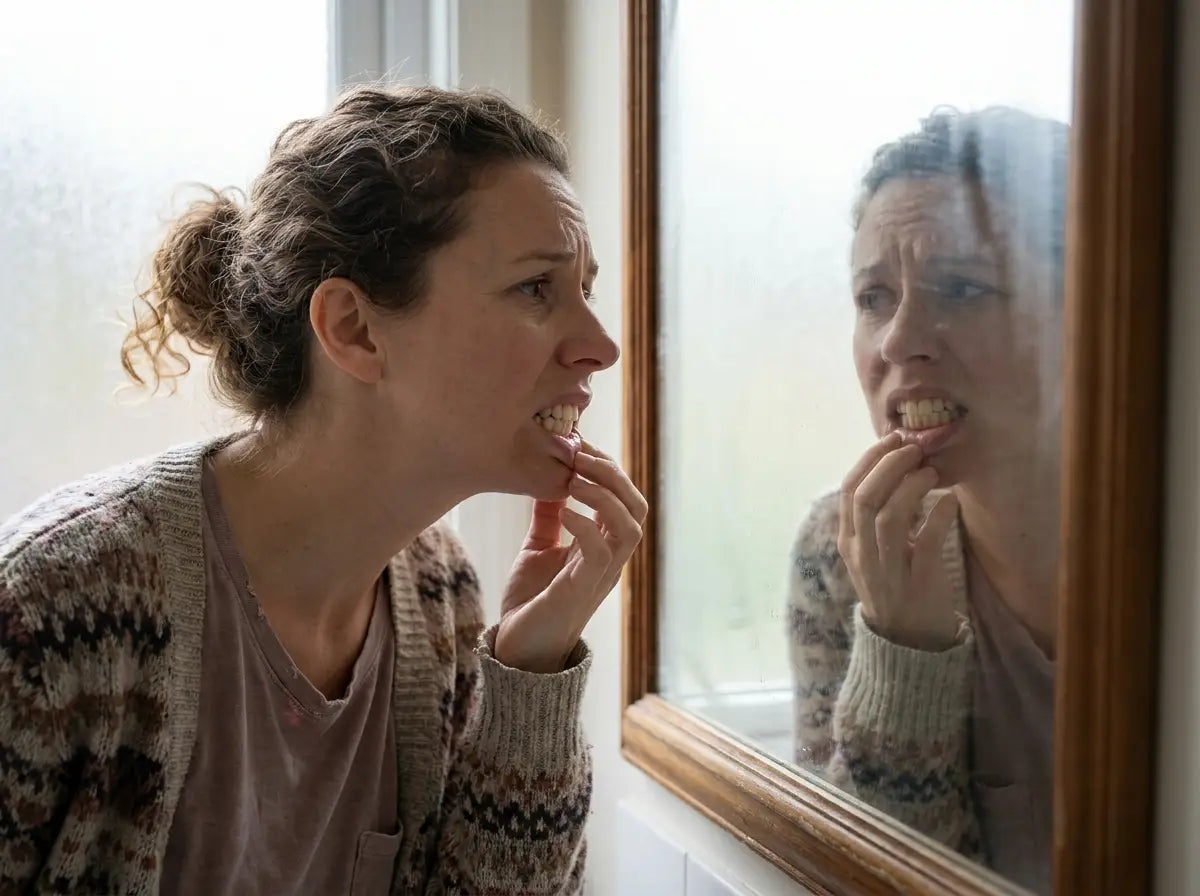
Here's the thing they all have in common. Every one of these treats your teeth as if the yellow were a stain sitting on the surface — something to scrub off, bleach out, or paint over. It almost never is.
The Real Problem Is The Thinning Of Your Enamel
As an implantologist, I look at teeth differently than cosmetic dentists do. I'm not thinking about shade guides — I'm thinking about structure.
Your teeth are made of two layers. The outer layer (enamel) is naturally white-ish. The inner layer (dentin) is naturally yellow.
Teeth can look darker with age as enamel thins; that is a normal process, not proof that someone stopped caring for them.
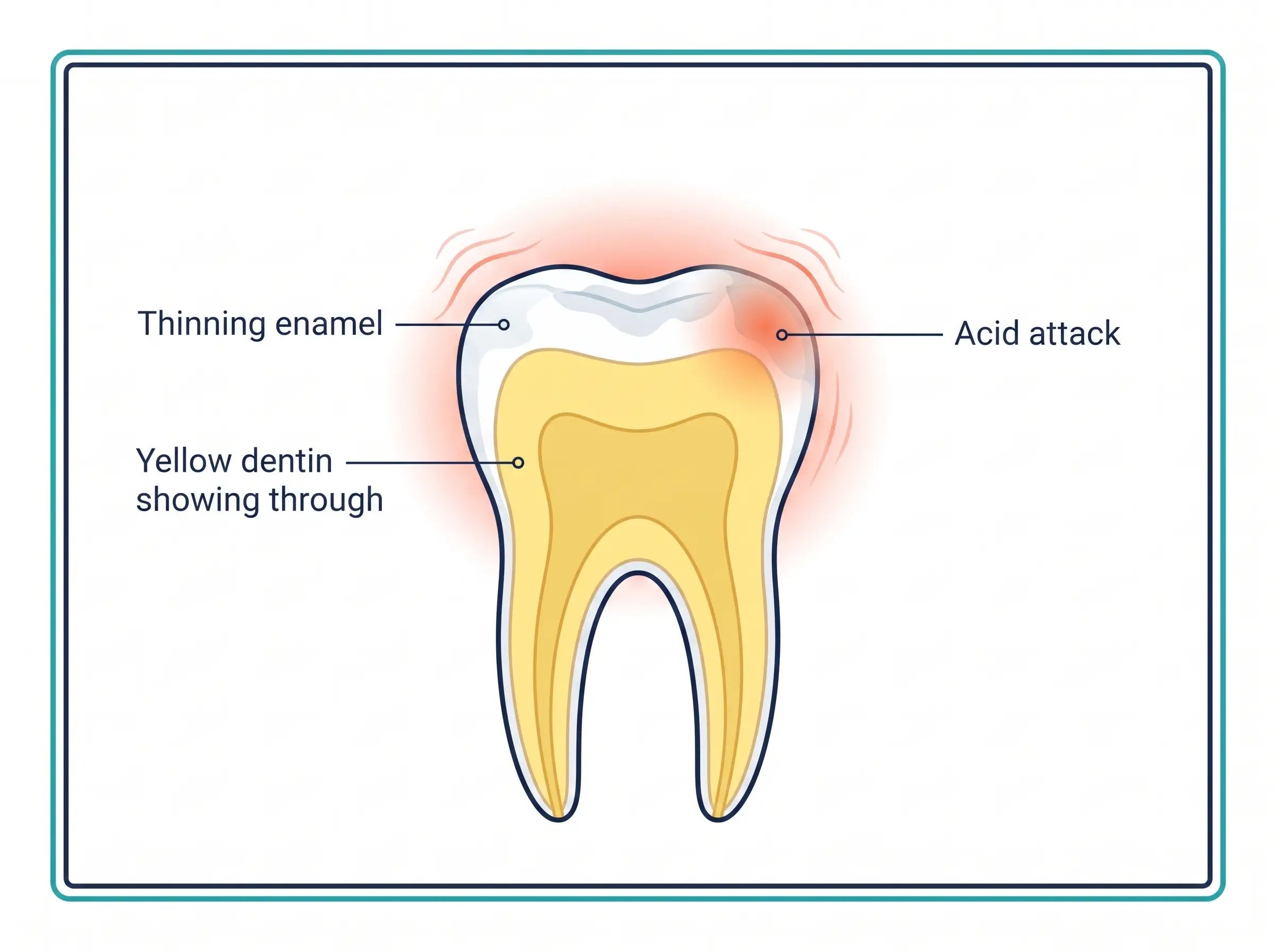
So here is what is actually happening. Your teeth aren't getting yellow because they are stained. They are getting yellow because the white layer (enamel) is getting thinner, and the yellow layer (dentin) is showing through.
What thins your enamel? Acidic foods. Coffee and tea, sipped all day.
Long-term coffee drinkers can feel that their pearly whites are no longer very white.
And — this is the cruel part — whitening strips and abrasive toothpastes. The very things you're using to whiten are wearing that white layer down. You cannot brush away a structural thickness problem.
Every "Solution" You're Offered Makes It Worse
Once you understand the layers, the popular fixes start to look horrifying.
Charcoal toothpaste only makes your teeth whiter because it takes the top layer of enamel off, exposing the brighter layer underneath. You are literally sandpapering your teeth.
And the strips? You're basically bleaching a porous body part — and it feels exactly as bad as that sounds.
People describe the pain as excruciating—like a dozen root canals without anaesthetic.
Some people stop the process because the pain is too much.

The regret can be hard to read.
The regret can be severe: years of whitening ‘bullshit’ can end with people feeling that veneers are their only option.
Some people describe enamel literally crumbling from the fronts of their teeth.
You only get one set of adult teeth. It is not worth messing them up.
Even When It "Works", It Never Lasts
Say you push through the pain and get a result. Look at what happens next.
The brightening can be temporary—sometimes lasting only a few hours after use.
Stopping for six months can leave someone back at square one.
Because bleaching doesn't fix the underlying issue — thin enamel — the yellow simply comes back. And each round leaves the enamel thinner than before.
You are trapped in a cycle of paying for temporary results while permanently damaging your teeth.
So What Can You Actually Do About It?
If you want lasting results, you have to address the root cause — the thinning enamel itself — not the shade of the surface.
That means:
- Neutralising the acid attacks that thin your enamel after every coffee and meal
- Rebuilding the enamel layer with hydroxyapatite — the exact mineral your teeth are made of
- Protecting your teeth during the hours between brushings
- Doing it without bleach, pain, or sanding your enamel away
The real desire is not a fake promise; it is the hope that there is a safer way.
This Is Why I Developed CariSpray Adult
I watched patients destroy their enamel for years. I knew hydroxyapatite worked — it's the same mineral 97% of your enamel is made of — but brushing with it wasn't enough.
Brushing only covers 4 minutes of your day. The acid attacks from coffee and food happen during the other 1,436 minutes.
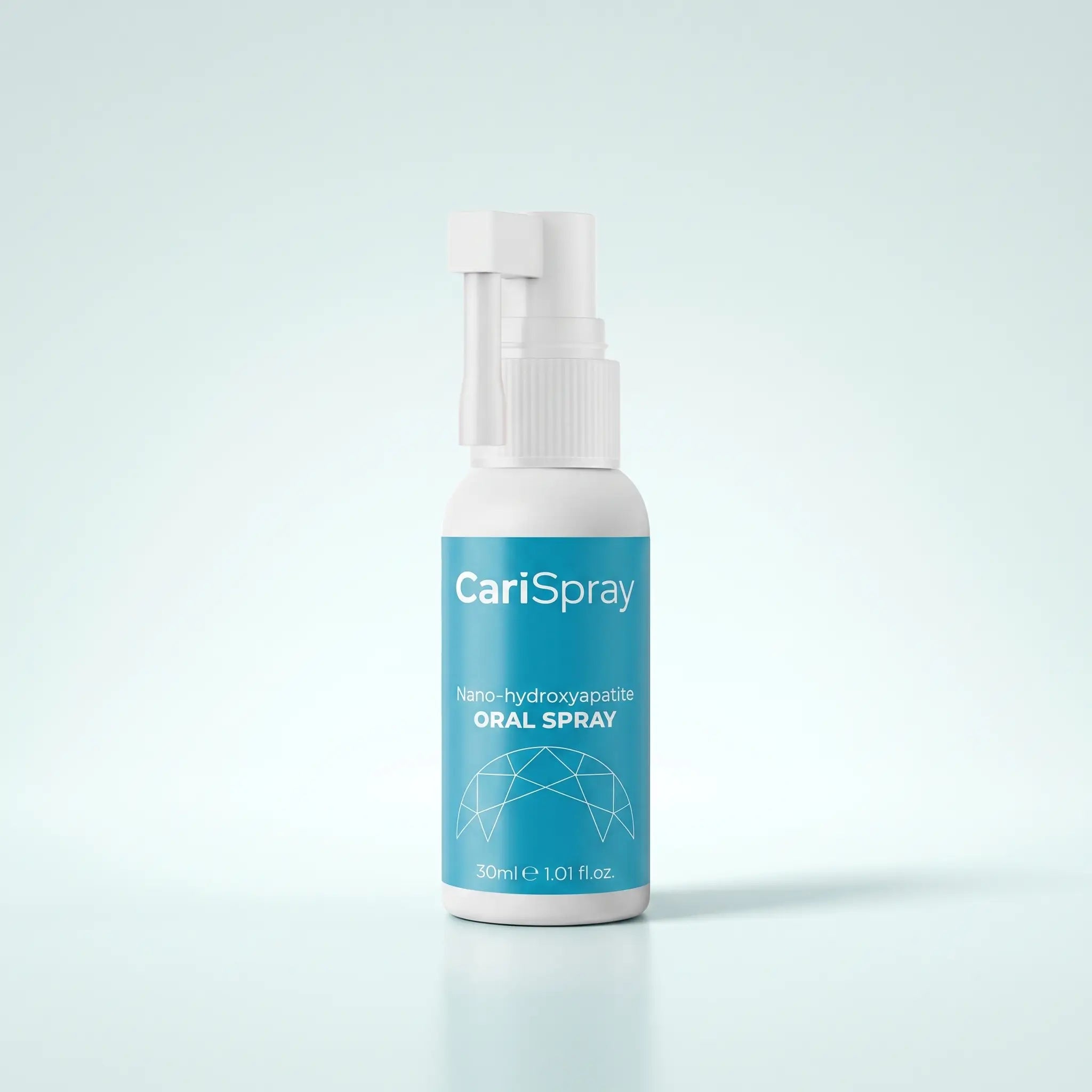
That's why my lab created CariSpray Adult — the first hydroxyapatite delivery system in a spray format.
You don't need trays. You don't need 30 minutes. You just spray it twice after your morning coffee.

- It neutralises acids instantly
- It rebuilds the enamel using hydroxyapatite
- Clinically studied: 61% reduction in cavity-causing bacteria in 3 minutes
And the whitening? It's not a temporary bleach. It's structural — you're rebuilding the white layer itself, not stripping it away.
Some people want the change to last long enough that compliments become part of everyday life.
The best version is the one that makes people notice your own teeth—not the treatment.
Stop Bankrupting Yourself For Perfection
Professional whitening can be quoted at roughly £1,000.
The answer is not bankrupting yourself for an idea of perfection.
You don't have to.
OralAdvance Labs offers a 60-Day Risk-Free Trial. Try it. If your teeth aren't visibly whiter and feeling stronger, we refund you.